§1.2
Super-node, not home market
Dense enough in users, payment connectivity, developer activity, and regulatory attention that a complete operating model can be proven before replication.
Three demand layers, three compounding gaps, and Access Parity as a constraint on product design — not a promise about outcomes.
§1.1 Demand Stack
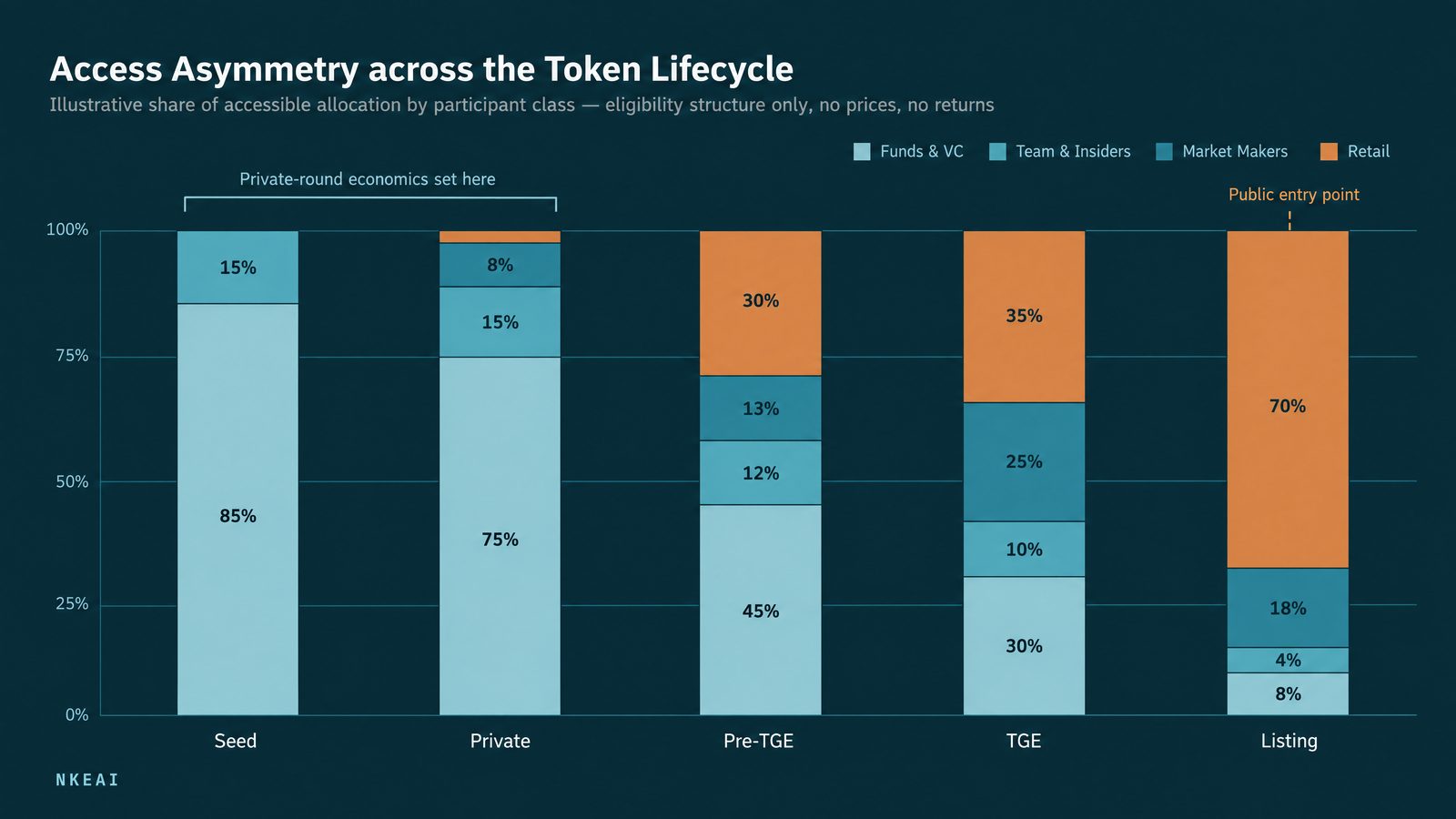
Demand inside emerging corridors arrives in order. First: an exit from local-currency volatility — a dollar-denominated balance. Second: participation, once a stablecoin balance sits idle while assets move. Third: early-stage access — the layer least served, where the largest returns in this asset class are made.
The consequence is a market where retail participation is high and retail capture is low. Volume concentrates in instruments with symmetric payoffs that require skill to profit from, while allocation programs with real economic value attract automated extraction.
§1.1 Three Gaps
Information latency is mechanical: professional desks monitor contract deployments and treasury movements that retail streams do not surface in time. Tooling is the most tractable gap — retail instruments are built for discretionary clicking, not position sizing against correlation. Allocation is hardest: it is a distribution problem with a security problem attached.
Access Parity says nothing about which assets appreciate, and everything about who is permitted to compete for them. Where a gap cannot be closed by design, the honest move is to shrink the distance rather than pretend it has vanished.
§1.2 Super-Node
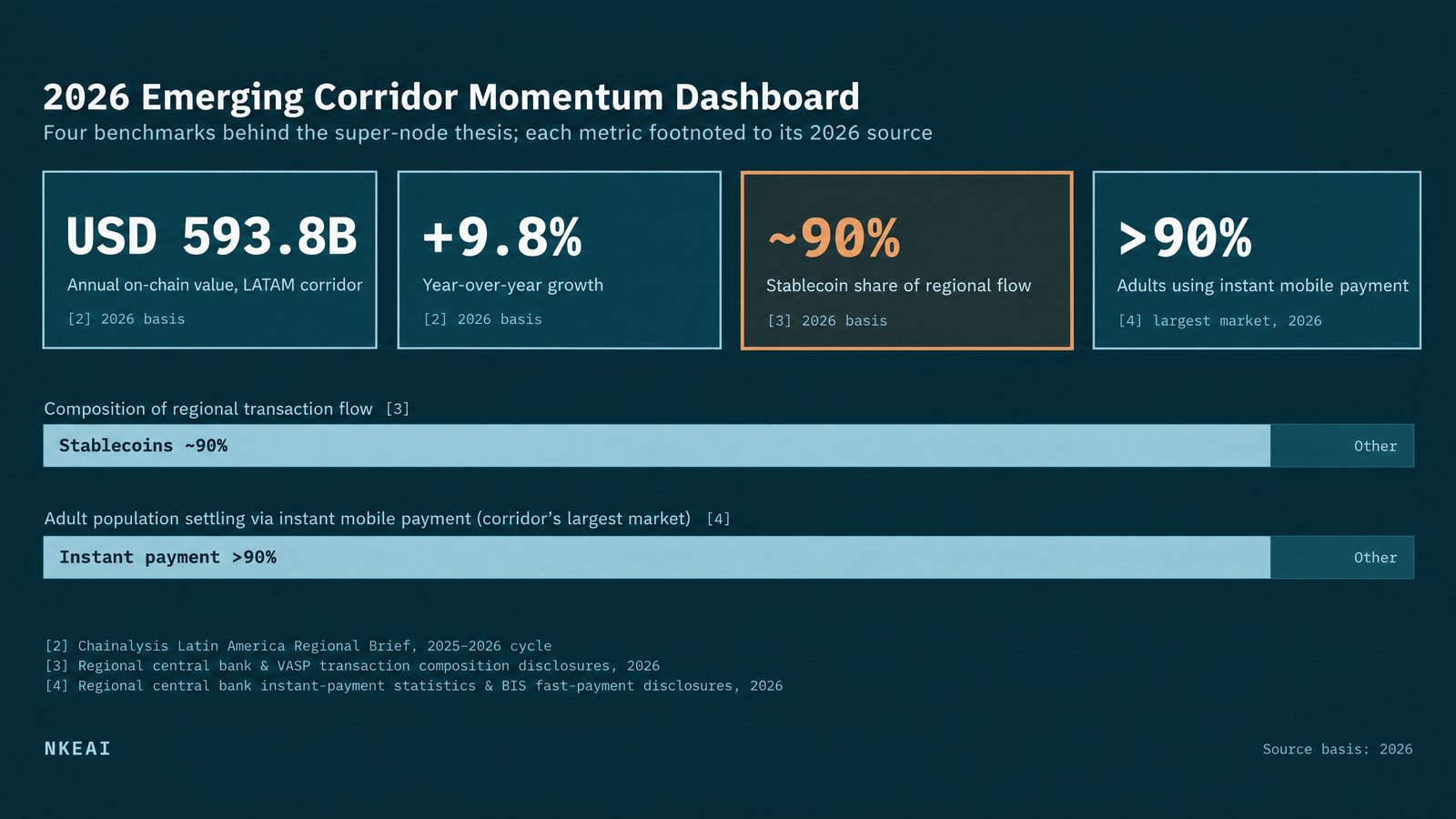
Between 2023 and 2026 the geography of crypto activity changed shape. High retail density coexists with defensive store-of-value behavior; instant mobile payment has become the default settlement habit.
Dense enough in users, payment connectivity, developer activity, and regulatory attention that a complete operating model can be proven before replication.
Macroeconomic momentum does not supply local banking authorization. Nothing here claims domestically licensed bank or payment-institution status in every corridor market.
U.S.-incorporated entity; continuous deployment behind capability flags; independent security review before modules touch production capital.